Best Patio Covers for Coastal vs Inland San Diego
San Diego County has two very different backyard climates. Near the coast, mornings are cool, afternoons are breezy and salt air is constant. Inland, summer afternoons are hot and the sun is intense. The best patio cover for your home depends on which side of that line you live on.
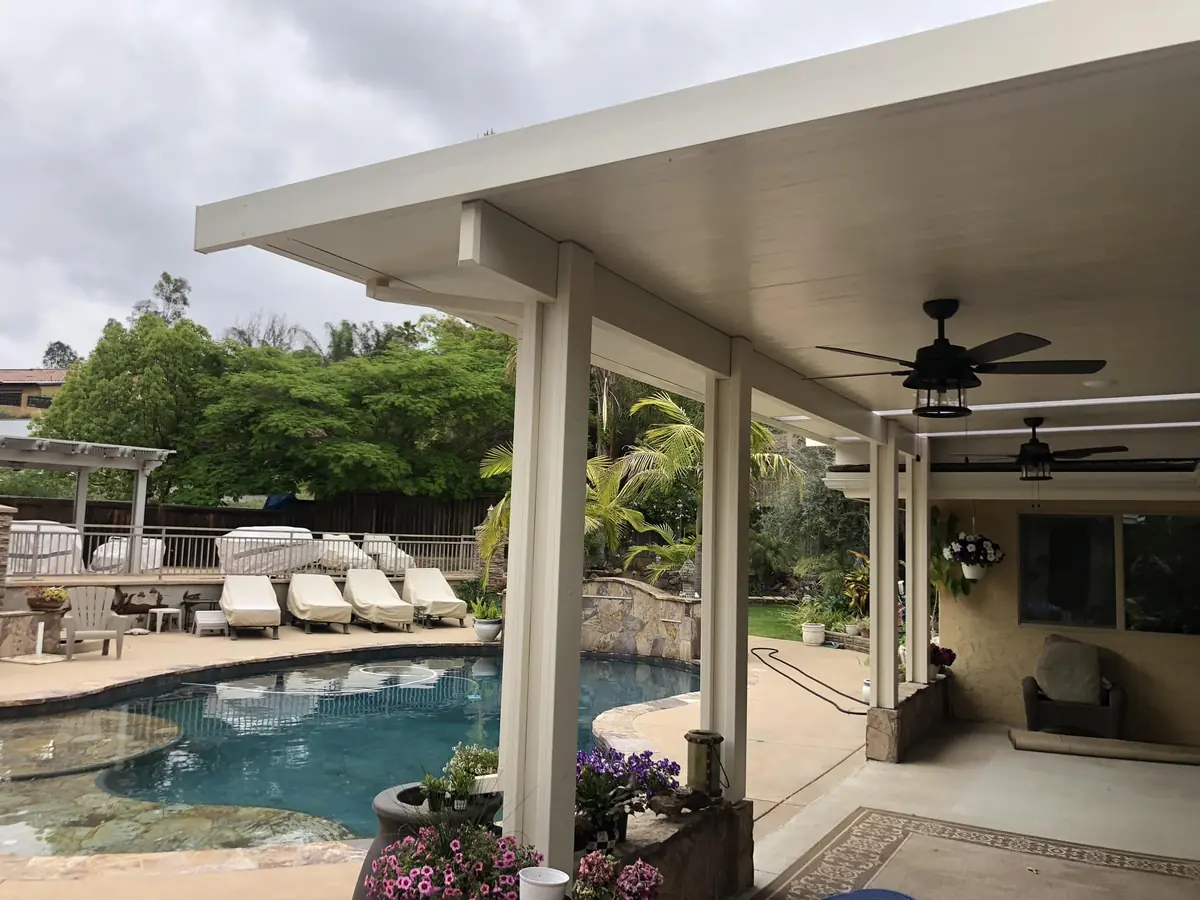
Which side are you on?
Here is how we group the areas we serve. Many cities, like San Diego and Chula Vista, have both.
- Coastal: Oceanside, Carlsbad, Encinitas, National City
- Mixed (coastal and inland neighborhoods): San Diego, Chula Vista
- Inland: Escondido, El Cajon, Vista, San Marcos, Santee, La Mesa, Poway, Rancho Bernardo, Spring Valley, Ramona
Coastal homes: fight salt and wind
- Material: aluminum is the go-to near the ocean because it does not rust. Wood can work but needs more frequent refinishing, and steel hardware rusts faster in salt air.
- Roof: sun is milder, so lattice covers and pergolas often give enough shade while keeping the space bright.
- Wind: evening breezes are the main comfort issue. Screen or clear vinyl panels and drop shades make a covered patio usable later into the evening. See patio enclosures.
- Permits: many coastal homes are in the Coastal Zone, which can add a coastal review and time. In the City of San Diego, the Coastal Zone removes the small-cover permit exemption.
- Upkeep: rinse aluminum with fresh water every month or two to keep salt film from dulling the finish.
Inland homes: fight heat
- Roof: a solid or insulated roof makes the biggest difference. Insulated panels block much more heat than a single layer and keep the space noticeably cooler. See patio covers.
- Fans and lights: plan for ceiling fans from the start. Insulated roofs are the easiest base for wiring.
- Orientation: west-facing patios take the hardest afternoon sun. A deeper cover or a drop shade on the west side helps.
- Fire zones: homes near open space may sit in a fire hazard severity zone. Escondido requires fire-retardant treated wood framing for patio covers in those zones, and San Marcos's standard plan is designed for wildland-urban interface areas. Aluminum avoids most of these concerns.
- Year-round rooms: if you want to use the space in summer and winter, a four-season sunroom with good glass and a mini-split is the most comfortable option.
Quick picks
| Goal | Coastal | Inland |
|---|---|---|
| Shade on a budget | Lattice cover or pergola | Solid cover |
| Coolest outdoor room | Solid cover | Insulated cover with fans |
| Block wind or bugs | Screen or vinyl enclosure | Screen enclosure |
| Use it all year | Three-season room | Four-season sunroom |
Not sure which fits? A local contractor can look at your sun exposure and wind at a free estimate. Costs for each option are in our 2026 cost guide.
Ready to Get a Quote?
Tell us about your project and one licensed, insured local contractor will contact you within 1 business day.
Get Free QuotesCommon Questions
What is the best patio cover material near the beach?
Aluminum, because it does not rust in salt air and needs very little maintenance. A freshwater rinse every month or two keeps the finish looking new.
What patio cover keeps the most heat out?
An insulated patio cover. Its foam-core panels block far more heat than a single-layer roof, which makes it the most popular choice inland.
Does living near the coast affect permits?
It can. Homes in the Coastal Zone may need a coastal review, and in the City of San Diego the Coastal Zone removes the permit exemption for small patio covers.
Sources
City of San Diego: Information Bulletin 206, Patio Covers · City of Escondido: Solid Roof Patio Cover Guideline · City of San Marcos: Patio and Carport Standard Plan. Rules and prices change, so confirm details with your city and contractor.