Choose a material
Aluminum
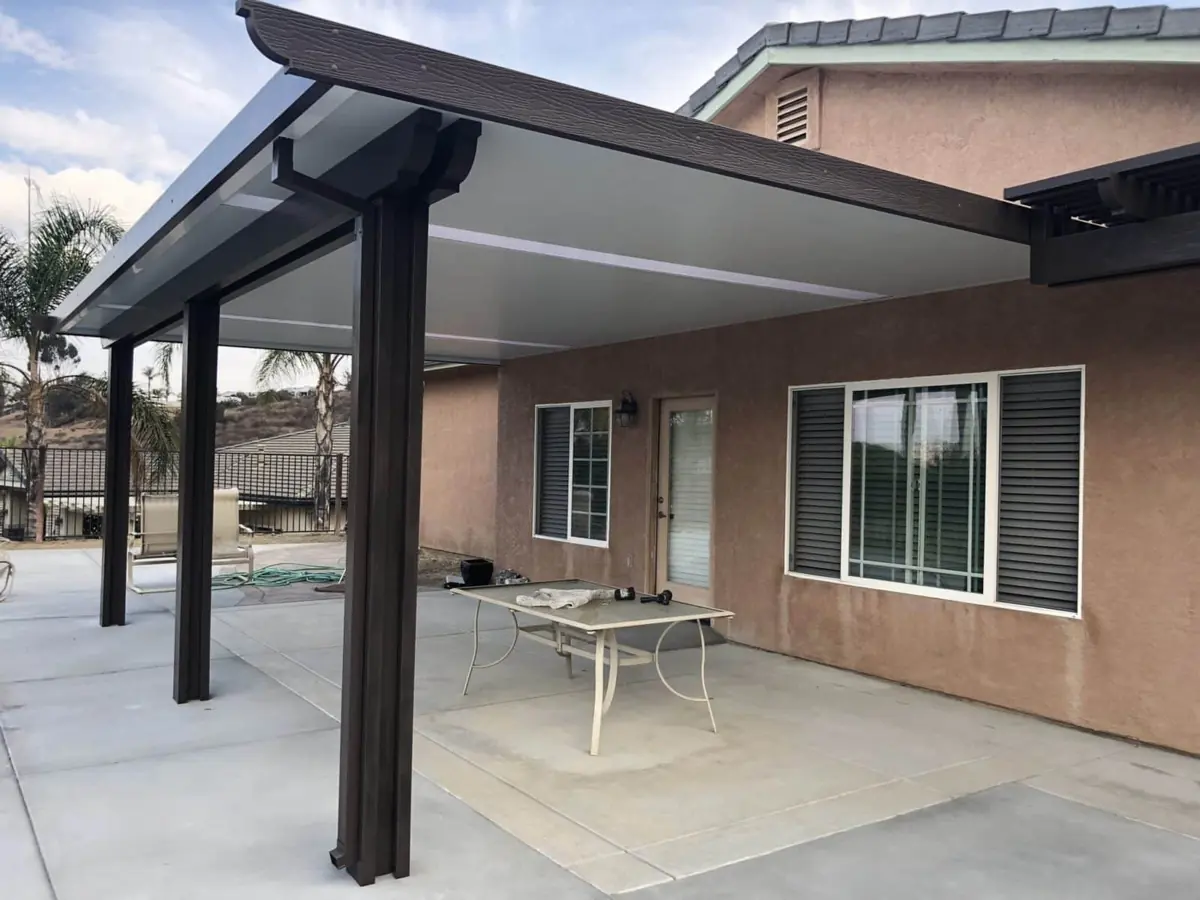
The most common choice in San Diego. Aluminum covers do not rot, warp or attract termites, and many come with a wood-grain finish that looks like painted wood from the yard. They need very little care beyond an occasional rinse, and they hold up well in coastal air.
Wood
Wood offers the most design freedom. A carpenter can match your home's trim, rafter tails and color exactly. The trade-off is upkeep: wood needs regular sealing or painting, and it is exposed to sun, moisture and termites over time.
Louvered
Louvered covers use adjustable aluminum blades on top. Open them for sun and airflow, close them for shade or rain. They are the most flexible option and usually the most expensive, and many systems can be motorized.
Choose a style
- Lattice: open slats on top for filtered shade and airflow. Does not block rain.
- Solid: a full roof for shade and rain protection.
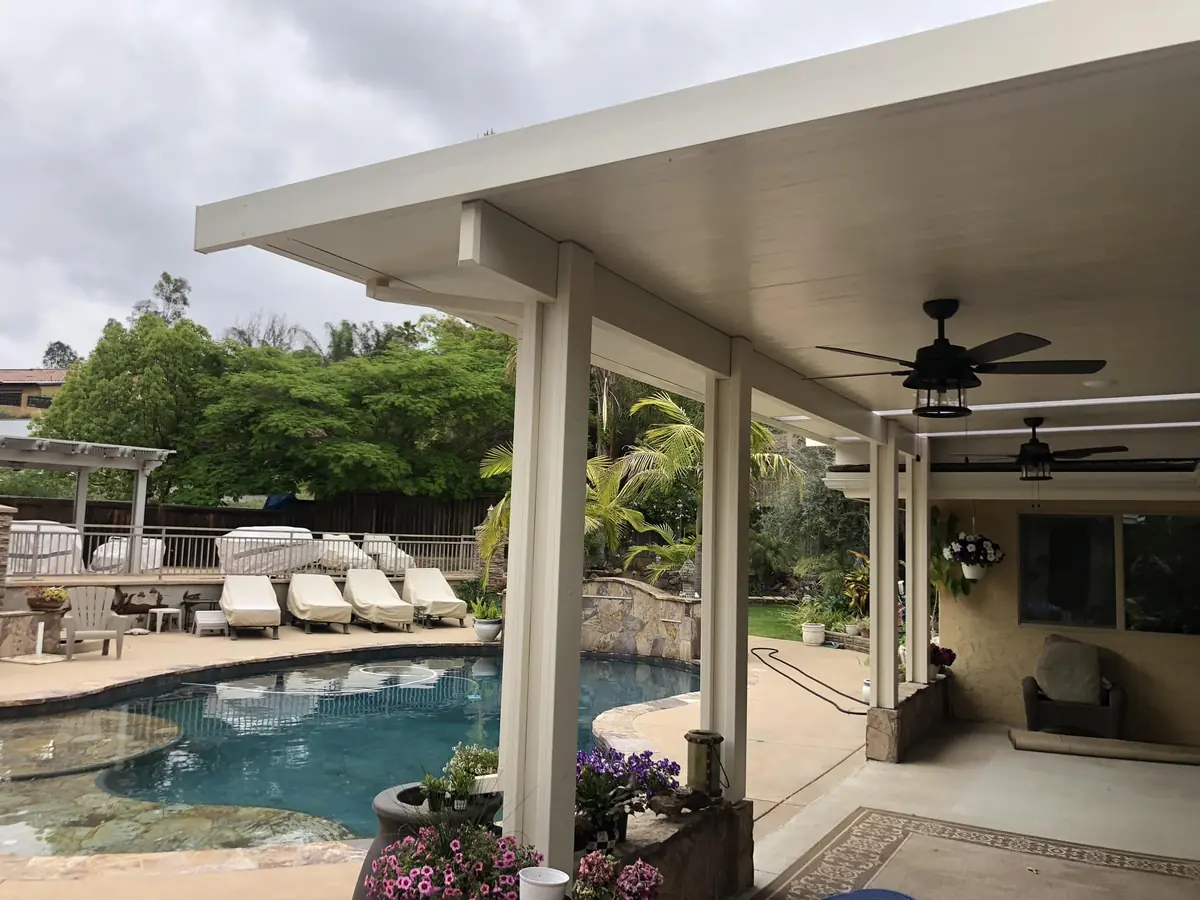
- Insulated: a solid roof with a foam core that keeps the patio cooler and makes it easy to add fans and lights.
- Combination: a solid section near the house and lattice beyond it. A popular way to get a dry seating area without darkening the whole yard.
Attached or freestanding
Attached covers connect to the house and usually cost less, since the house carries one side. Freestanding covers stand on their own posts and can go anywhere in the yard. If you want an open-top freestanding structure, take a look at pergolas.
What San Diego weather means for your choice
Coastal neighborhoods get marine air and milder summers, so lattice or a standard solid roof is often plenty. Inland areas like El Cajon, Santee, Escondido and Poway run much hotter, and an insulated roof makes a real difference there. A west facing patio takes the hottest afternoon sun almost anywhere in the county.
Planning to enclose it later?
If you might add screens or glass down the road, tell your contractor up front. An insulated roof with properly sized posts and footings makes a future patio enclosure much easier.